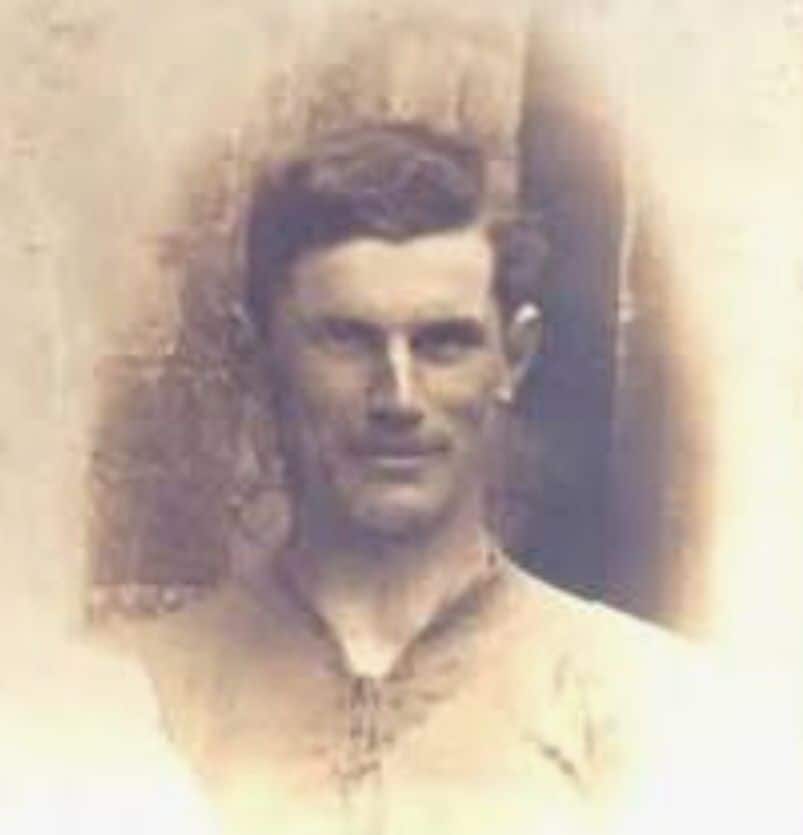
For the day that’s in it, I sent the featured image to several friends on WhatsApp without any comment.
Dear reader, I inadvertently conducted a not-very-scientific social science experiment.
All of the Irish recipients immediately recognised Michael Hogan and responded appropriately.
My British friends didn’t know who the man in the sepia-toned image was.
A few of them asked.
So, a good-faith interrogative elicited a good-faith reply.
My first thought was, “Where to start”?
Context is important.
On the morning of 21st November 1920, at addresses around the city, Michael Collins dispatched his Active Service Unit, “the Squad “ and members of the Dublin Brigade to assassinate members of British intelligence.
15 were shot dead, including an RIC sergeant and two Auxiliaries.
Two of the intelligence officers were undoubtedly high-value targets:
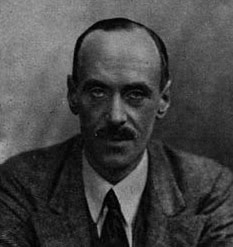
Lieutenant Peter Ashmun Ames (pictured) and Lieutenant George Bennett both resided at a lodging house in Upper Mount Street.
It was a stunning coup that put the chaps in Dublin Castle into a panic.
Later that day, the innocents would suffer for the IRA’s victory.
Members of the RIC Auxiliary Division fired into the crowd at the match between Dublin and Tipperary.
It was racial guilt.
The Irish had carried out the assassinations, so other Irish would have to pay for it.
That is why allowing the British head of state, the late Elizabeth Saxe-Coburg-Gotha, to visit Croke Park was such an important gesture from the GAA and, indeed, the Irish nation.
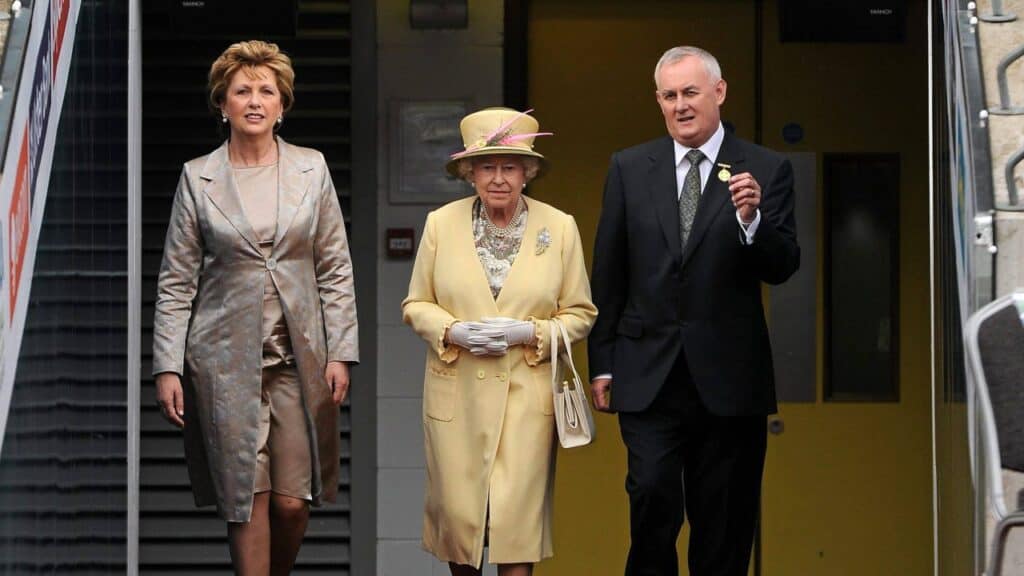
This was after the day that she had bowed her head in the Garden of Remembrance to honour the memory of, among others, members of Óglaigh na hÉireann who fought Crown forces in the War of Independence.

For the multitudes that attend Gaelic matches every year in Croke Park, you would struggle to find anyone who doesn’t know why the Hogan Stand is so named.
My accidental WhatsApp experiment reminded me just how little British people know about this island or its people.
I am reminded of the words of Jennifer Horgan.
She’s an Irish history teacher who taught for a dozen years in English schools.
She said on Newstalk on October 5th 2022:
“Arriving in London, I was met with people who knew nothing…They really genuinely had not been taught anything about the history of our two countries”.
Clearly a change to the school curriculum could address it, but it would raise some difficult issues.
For example, perhaps Britain hasn’t always been the good guy.
106 years ago today, in my capital city, the Brits were certainly not the good guys.
Here are the victims of the massacre at Croke Park:
Jane Boyle (26), Dublin
James Burke (44), Dublin
Daniel Carroll (31), Tipperary (died 23 November)
Michael Feery (40), Dublin
Michael ‘Mick’ Hogan (24), Tipperary
Tom Hogan (19), Limerick (died 26 November)
James Matthews (38), Dublin
Patrick O’Dowd (57), Dublin
Jerome O’Leary (10), Dublin
William Robinson (11), Dublin (died 22 November)
Tom Ryan (27), Wexford
John William Scott (14), Dublin
James Teehan (26), Tipperary
Joe Traynor (21), Dublin
Lest we forget.
For the day that’s in it.

Discover more from Phil Mac Giolla Bháin
Subscribe to get the latest posts sent to your email.
