On this day, 70 years ago, Britain finally got the memo.
Their era of their global preeminence was over.
The historical moment that had started with victory in the Battle of Plassey in 1759 by the East India Company in Bengal had, in truth, ended with the detonation of Little Boy over Hiroshima on August 6, 1945.
However, in the decade after that, those in Westminster still clung to the comforting delusion that Britain was still a world power capable of independent global action.
Despite the military operation’s success, the world had moved on.
President Dwight D. Eisenhower decided to bring the British Bulldog to heel.
The man who was the Supreme Allied Commander on D-Day assessed his options.
His Chief of Staff of the US Navy at the Pentagon, Admiral Aleigh Burke, laid it out for him.
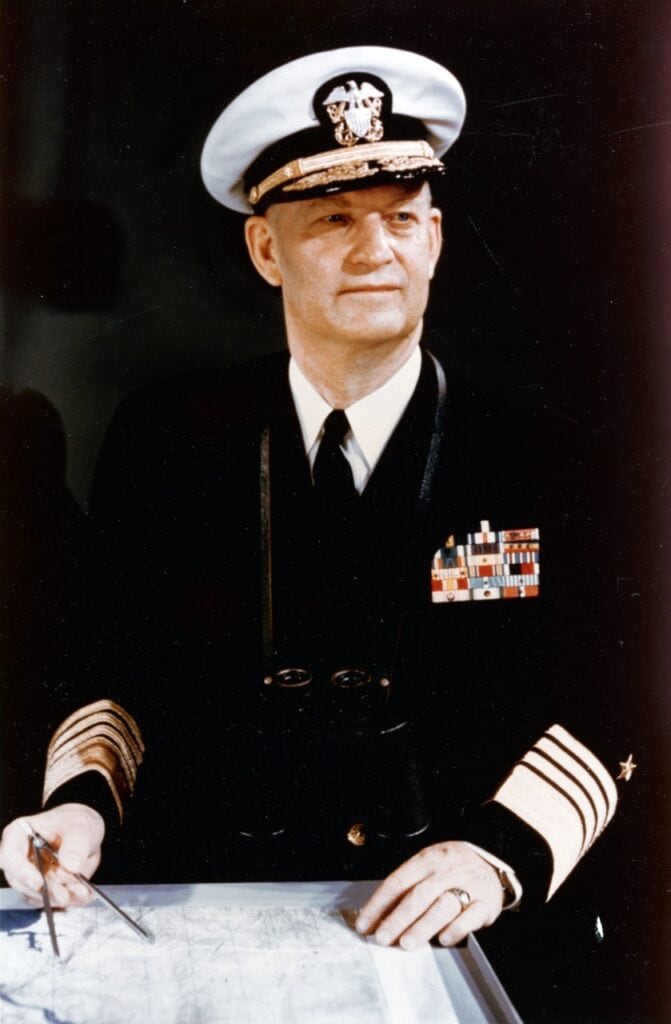
The following is from Keith Kyle’s magisterial work “Suez”:


“We can stop them, but we will blast hell out of them”.
Despite having the military option, Ike used the Federal Reserve rather than the US Navy.
Bankrupt Britain, in hock to Uncle Sam, had to obey.
It was complete humiliation.
These days, the Arleigh Burke-class destroyer is a workhorse of the US Navy, and there are 75 in service.
The British equivalent is the Type 45, and the Brits have six.
When the Iran war started, they had ONE available, HMS Dragon.
Apparently, when it got to Cyprus, it developed a bit of a cough.
A ten-year-old during the Suez Crisis was 30 when Chancellor Denis Healey had to go to the IMF for the biggest loan that institution had ever given.
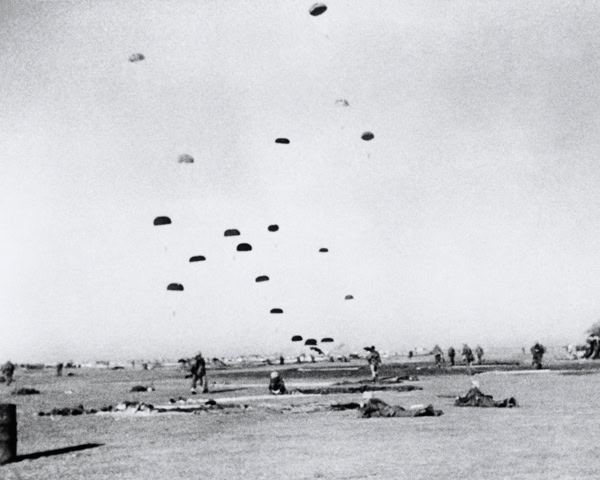
The featured image shows British Paratroopers landing on El Gamil airfield as part of Operation Musketeer.
For the avoidance of doubt, the idea that the Brits could launch an independent military adventure without the express permission of the gut in the Oval Office is risible.
Indeed, the reality was revealed by the Chilcot Inquiry into the circumstances leading up to the Iraq War.
It revealed that a confidential memo sent on July 28, 2002, in which British Prime Minister Tony Blair wrote to U.S. President George W. Bush: “I will be with you, whatever” regarding the removal of Saddam Hussein.
Very clingy, very needy.
I’ve found that people don’t change much, but generations do.
The ten-year-old who lived through the Suez Crisis had reached their three score and ten when the UK voted for Brexit in 2016.
One of the largest demographics to vote leave was those 70 years old.
Perhaps the “take back control” slogan resonated with them from that childhood experience.
Now the new occupant of Number Ten was to, somehow, undo Brexit.
I have written here many times that the decision taken in 2016 would turn out to be a “Slow Moving Suez Crisis”.
I think that I’ll stick with that.
As I close in on my own three score and ten milestone, I look back at the world my grandparents knew and their service in the West Mayo Brigade, Irish Republican Army.
They faced a global superpower with the world’s biggest navy.
All is changed, changed utterly.

Discover more from Phil Mac Giolla Bháin
Subscribe to get the latest posts sent to your email.
